|
Welcome to our News Update for September 2022, if you are visiting the Hunstanton SEA LIFE, don´t forget to purchase your entrance tickets in advance.
|
| Rescued Common Seals Pups 2022
|
|
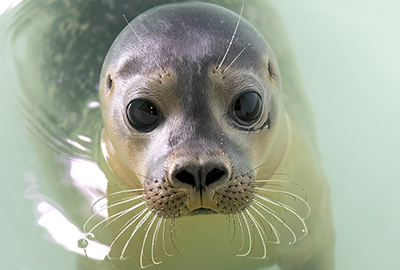
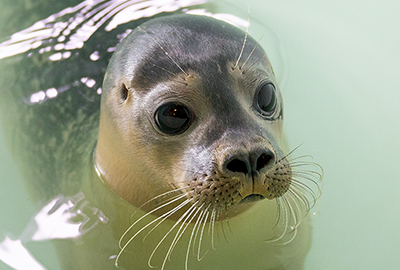
Brie is currently in the weaning pool in the hospital, in the next week or so, she will be moved to the outdoors seal pups pool for her final stage of rehabilitation. These photos of Brie were taken on 13th September 2022.
|
|
Wensleydale (photo below top left), Applewood, Camembert and Blue Cheese (photo below top right) are enjoying being outdoors in the new seal pups pool. These four pups will be ready to be released back out into the wild very soon. Click here to see larger versions of the photos which were taken on 13th September 2022.
|
New for 2022
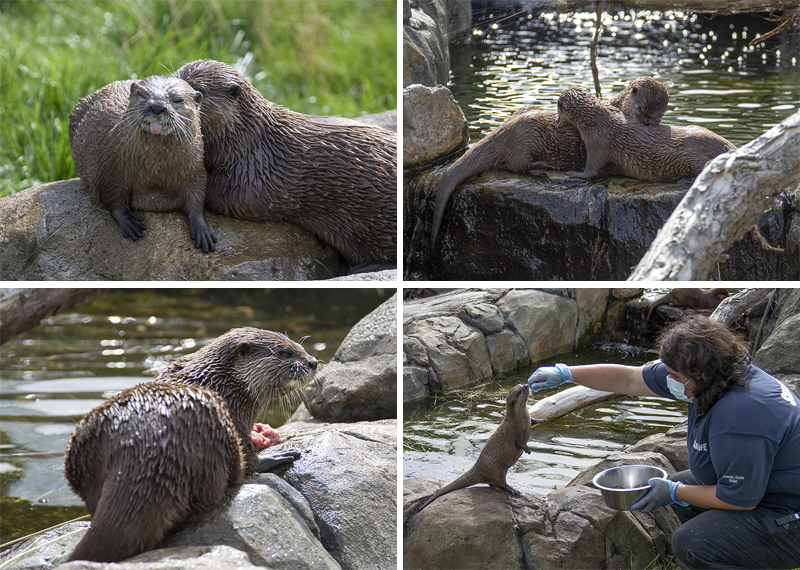
- Summer and Twix, Asian Short-Clawed Otters, are continuing to enjoy their new home.
Click here to see larger versions of the photos.
Interesting fact - The dextrous, sensitive front paws of Asian Short-Clawed Otters are used to rummage
for prey in mud and shallow water and even to juggle their food!
|
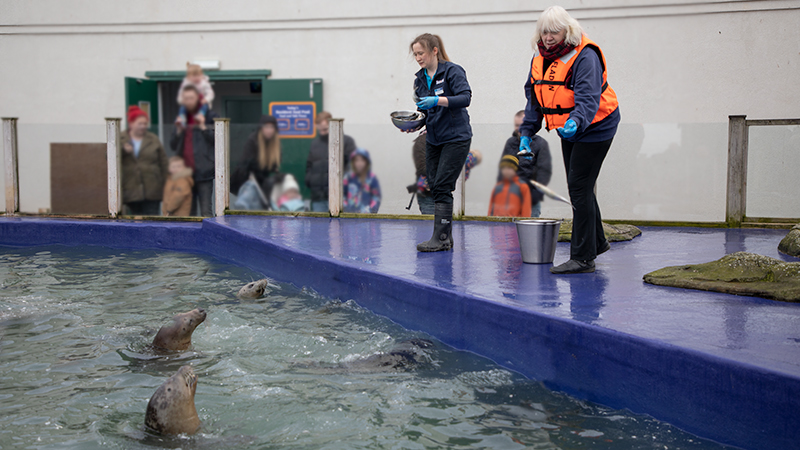
Resident Seals -
Click here to see larger versions of the photos.
Interesting fact - The Common (Harbour) Seals (Phoca Vitulina) are smaller than Grey Seals and their coats are more extensively spotted. Their facial features are also different, with snub noses and nostrils that form a "V" shape. Common Seals prefer hauling out on sand banks and gently shelving rocky, shingle or sandy beaches.
|
Did you know you can feed the six resident Common Harbour Seals at SEA LIFE Hunstanton?
In this VIP Experience, you will get to feed the seals their fishy feed with a member of the animal care team on hand to assist you and answer any questions you might have.
You´ll get to learn all about the seals, their diets and habitats but be careful they like to splash!
For more information please click here and to book your VIP Experience.
|
Click here to see a larger version of these photos of the Humboldt Penguins.
Interesting fact - Humboldt Penguin´s head is black with a thin white band extending from above the eye, down each side of the head to the throat and running further down the sides of the body to the legs. A single wide black band runs in an upside-down U shape across the breast and down to the legs. Black spots are scattered across the breast. Bill is black with a grey vertical stripe. Bare pink patches of skin are present at the base of the bill and extend to the eyes. Legs and feet are black, eye is reddish brown.
|
| If you find a Seal in the Wild
|
|
For over 33 years Hunstanton SEA LIFE has been rescuing, rehabilitating and releasing seal pups from the North Sea coastline and beyond that find themselves in trouble, whether it be eye problems, respiratory infections and malnourishment to broken bones, pollution-related problems and being separated from their mother too soon.
A quick reminder that if you discover a seal pup that is in distress or alone, please call the Hunstanton SEA LIFE on 01485 533576 and/or the British Divers Marine Life Rescue (BDMLR) team on 01825 765546.
The Animal Care Team are on call around the clock to race to the rescue of seal pups in trouble anywhere around the coast.
DO keep your distance;
DON´T attempt to handle or touch the pup;
DON´T attempt to put the pup back in the sea;
DON´T ignore the situation;
DO tell the appropriate organisation.
|
|
When you ring, please be prepared to give an exact location of the seal, your contact details, what condition is the seal in for example is it alone, thin, injured or seems unwell (noisy breathing, coughing, runny nose). Tell people around you to keep clear of the seal by at least 50 metres, if you can, draw a circle in the sand around the pup.
Remember most often seals come out of the water on to land to rest, digest after eating their food, relax and sleep.
|
|
What to do if you find a dead seal on beach!
If you come across a dead seal, the advice is not to touch or go near it, please call
West Norfolk council on 01553 616200.
If you find a stranded living marine animal, please call the SEA LIFE Sanctuary on 01485 533576 and/or the British Divers Marine Life Rescue (BDMLR) team on 01825 765546.
|
Souvenir Guide Books
Here are the front covers of the Sanctuary´s Guide book.
If during your next visit you purchase a copy, the profits go towards the care of the rescued seal pups in the hospital.
|

|
|
Click here to download Hunstanton SEA LIFE´s leaflet for 2022
|
|
This news update has been put together by volunteers/supporters of the Hunstanton SEA LIFE Sanctuary.
|
|