|
Welcome to our News Update for Winter 2024/25, if you are visiting the SEA LIFE Hunstanton, don´t forget to purchase your entrance tickets in advance.
|
Meet Connie who is the brand new Asian Short Clawed Otter (Aonyx cinereux)! She arrived a few weeks ago in November and is now settling into her new home here with us whilst we slowly work on introducing her to Twix, our male otter, who you can see at the Otter Creek. Introducing Otters is a slow process as they can be very territorial so we will be keeping them separate for a short period first.
The animal care team will be keeping a close eye on both Connie and Twix as their relationship develops.
Click here to see a selection of photos of the resident Otters, Twix and Connie.
|
| Enjoy a Magical Arctic Christmas
|
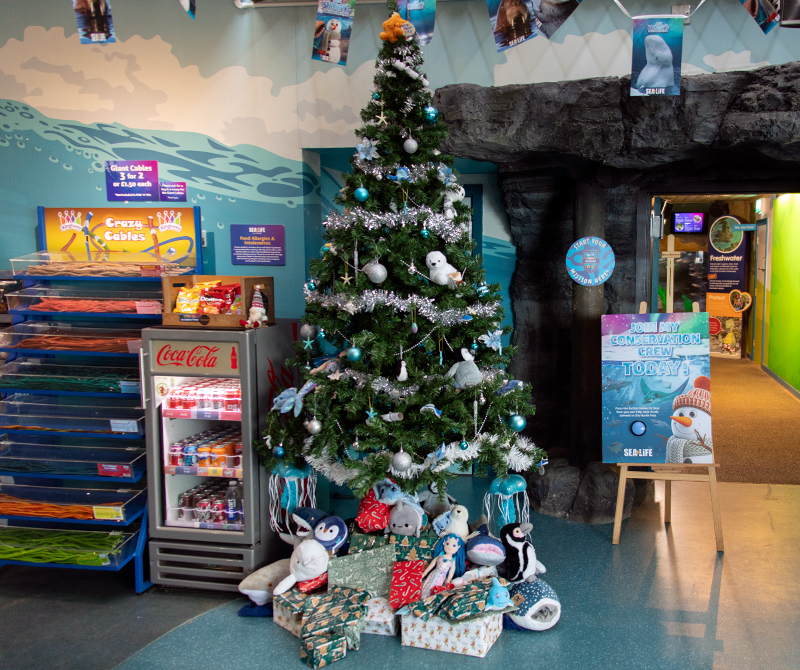
Snowy´s Conservation Crew between 30th November 2024 to 5th of January 2025 for a special artic Christmas adventure to learn about the amazing North Pole and the animals that live there.
Snowy invited children and their families to take part in an interactive trail through the aquarium as you meet all the jaw-some creatures along the way!
|
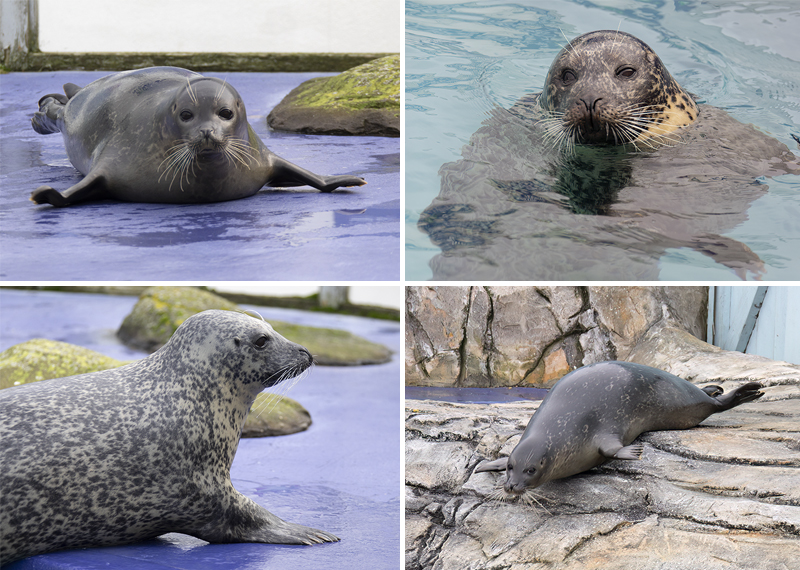
Wow Fact - The body of a seal is specifically structured for life in the water, with a smooth, torpedo shaped torso, and flattened, powerful flippers.
Did you know...Although seals are great swimmers in the water, they don´t actually spend all of their time in the sea. They often hobble onto the beach to rest!
Click here to see a selection of photos of the resident Common Seals, Callie, Amber, Sally, Lora, Pippa and Macey.
|
PLEASE NOTE : As of mid December 2024 until further announcements - The outside viewing platform of the penguin enclosure is currently closed due to Avian Influenza. The penguins can still be viewed through the large viewing windows indoors and the outside area will be re-opened when it is safe to do so.
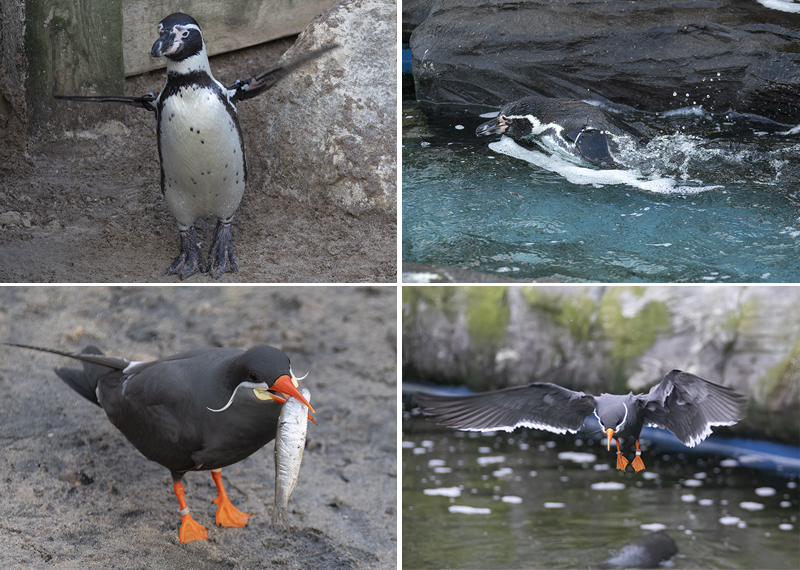
All the Inca Terns at SEA LIFE Hunstanton are captive born and bred. They are part of a global breeding programme which aims to safeguard the future of wild populations and contribute to the research being done into the reproductive biology and life history of this fascinating species. Inca Terns´ cool white moustache makes them distinct from all other birds!
Humboldt Penguins have spotty patterns on their chests and their bellies. These spots are individual to each Penguin, a little bit like a finger print!
Click here to see a selection of photos of the resident Humboldt Penguins and Inca Terns.
|
East Coast Shark Tagging - Conservation projects are always underway at SEA LIFE Hunstanton. One of the largest projects is to help conserve our coastline by learning more about the sharks and rays that live there. Every summer we catch, assess, tag and release sharks from local beaches!
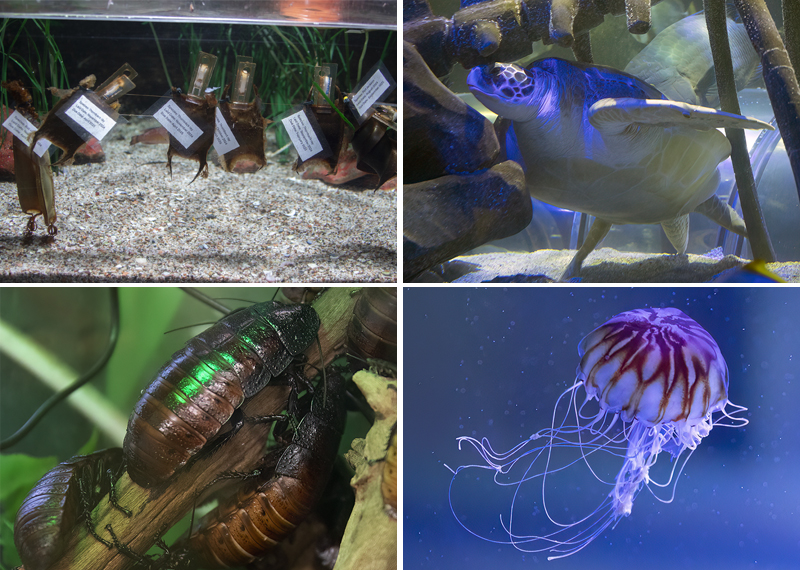
Click here to see a selection of photos of
Shark & Ray Nursery - "Mermaid´s purses",
Port Jackson,
East Coast Shark Tagging,
Yellow Seahorse,
Axolotl,
Pacific Sea Nettle,
Green Turtle - Ernie,
Madagascar Hissing Cockroach,
Red Bellied Piranha
and
Bull Huss Shark
|
|
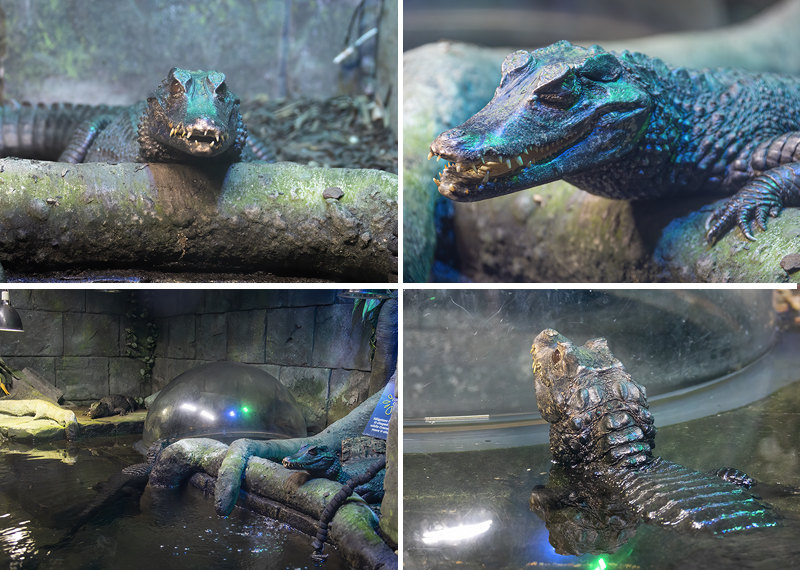
Cuvier´s Dwarf Caimen Crocodiles (Paleosuchus Palpebrosus) are at threat from deforestation, pollution, hunting and collection for the pet trade. Conservation status - Population numbers are strong and abundant. Caimans likes to eat crustaceans, fish and small birds. They can grow up to 1.6 metres in size! Habitat - Fast flowing freshwater rivers and streams, flooded forests, and large lakes in South America.
|
| Would you like to Sponsor an Animal?
|
Help make a real difference to the conservation work and breeding programs at SEA LIFE Hunstanton.
Your Adoption will Help to make a real difference to the conservation work and breeding programs at SEA LIFE Hunstanton. A SEA LIFE adoption also makes a fantastic gift.
By Clicking on this link for more information.
|
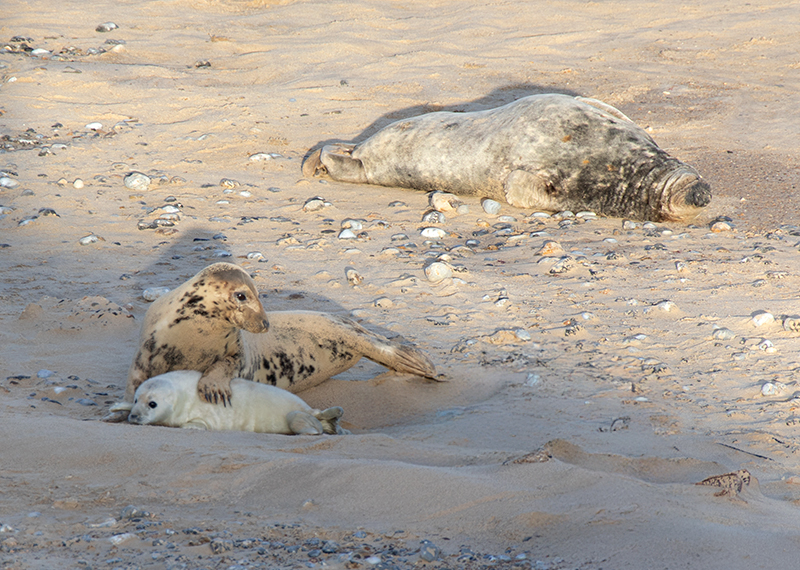
In December we went to check on a seal colony at Winterton in Norfolk. Click here to see larger versions of these photos taken during our walk along the restricted designated viewing areas of the dunes looking down onto the seal colony.
The grey seals pups season is normally between October and March, if you are visiting the coast around Norfolk, you may well see pups, can we remind you that they may look cute, but they have sharp teeth that carry harmful bacterial.
The below photos were taken with a Canon 7D camera and a 14mm-400mm lens. To see more photos, please click on this link to take you to the Fliker account.
|
|
For over 35 years SEA LIFE Hunstanton has been rescuing, rehabilitating and releasing seal pups from the North Sea coastline and beyond that find themselves in trouble, whether it be eye problems, respiratory infections and malnourishment to broken bones, pollution-related problems and being separated from their mother too soon.
A quick reminder that if you discover a seal pup that is in distress or alone, please call the SEA LIFE Hunstanton on 01485 533576 and/or the British Divers Marine Life Rescue (BDMLR) team on 01825 765546.
The Animal Care Team are on call around the clock to race to the rescue of seal pups in trouble anywhere around the coast.
DO keep your distance;
DON´T attempt to handle or touch the pup;
DON´T attempt to put the pup back in the sea;
DON´T ignore the situation;
DO tell the appropriate organisation.
|
|
When you ring, please be prepared to give an exact location of the seal, your contact details, what condition is the seal in for example is it alone, thin, injured or seems unwell (noisy breathing, coughing, runny nose). Tell people around you to keep clear of the seal by at least 50 metres, if you can, draw a circle in the sand around the pup.
Remember most often seals come out of the water on to land to rest, digest after eating their food, relax and sleep.
|
|
If you come across a dead seal, the advice is not to touch or go near it, please call
West Norfolk council on 01553 616200.
If you find a stranded living marine animal, please call the SEA LIFE Hunstanton on 01485 533576 and/or the British Divers Marine Life Rescue (BDMLR) team on 01825 765546.
|
Here are the front covers of the Sanctuary´s Guide book.
If during your next visit you purchase a copy, the profits go towards the care of the rescued seal pups in the hospital.
|
|
Click here to download SEA LIFE Hunstanton´s leaflet
|
The grey seals pups season is normally between October and March, if you are visiting the coast around Norfolk, you may well see pups, can we remind you that they may look cute, but they have sharp teeth that carry harmful bacterial.
This photo was taken using a large telephoto lens.
|
|
This news update has been put together by volunteers/supporters of the SEA LIFE Hunstanton
|
|