| 
| Cornish Seal Sanctuary
| | Issue 236
| August 2024
Back
|
The Cornish Seal Sanctuary has seen a very early start to their rescue season, with the arrival of its first seal pup admitted to the Seal hospital in August!
The pup named "Maggot", in line with the Sanctuary´s "Bugs & Mini Beasts" theme for the new season, was rescued by British Divers Marine Life Rescue from Porthtowan beach on a busy summer´s day. Click here to read more!
|
| Say No to the "Flying Rings"
|
These toys are fine for gardens and parks (away from waterways which could carry them seaward), but if lost on beaches or in rivers they can get washed out to sea where seals and other marine creatures can encounter them.
We are delighted that major retailer "Pets at Home" no longer sells flying rings online as a result of the risk they pose to seals, so have phased them out in their stores. Also CVS Vets have removed flying rings from their stores. Wilco removed them from their shelves and websites last Summer, and it was reported that ASDA had taken these off coastal store shelves as well. Along with Sainsbury´s as well. The rings are also banned by the King´s Lynn Council in Norfolk and Tiverton Town Council in Devon.
We are trying to educate everyone about the risks these flying rings pose to wildlife in general and encourage the sale and use of a solid disc, spoked ring or x shaped boomerang as an alternative.
| |
Please think carefully before purchasing a hollow flying ring!
|
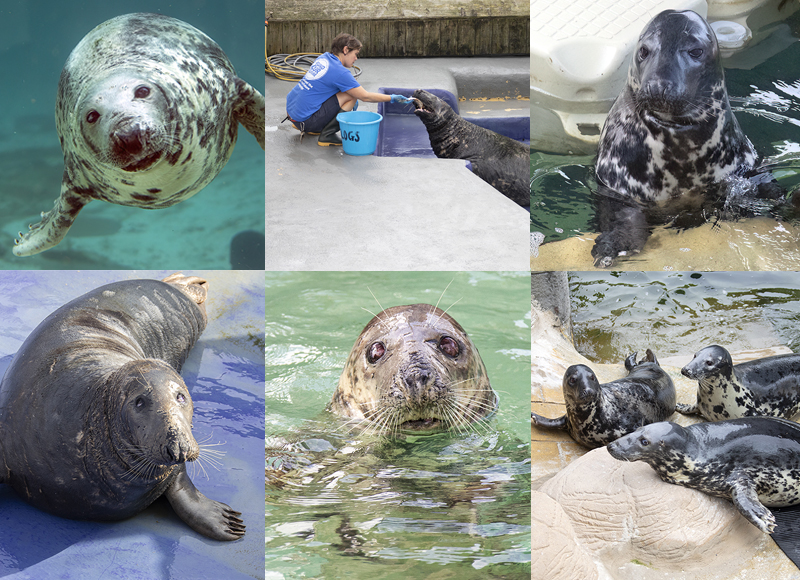
Did you know...The scientific name for the grey seal is Halichoerus grypus which means "hooked - nose sea-pig"?
These grey seals spend most of their time out at sea feeding on fish. They return to land to rest and can often be seen "hauled out", lying on British beaches. Grey seals give birth to fluffy white pups in the autumn/winter (depending what part of the UK you live in). These adorable pups stay on land until they have lost their white coats and trebled their body weight.
Click here or on the image below to see a selection of the resident grey seals photos which were taken in August 2024.
|
Did you know...
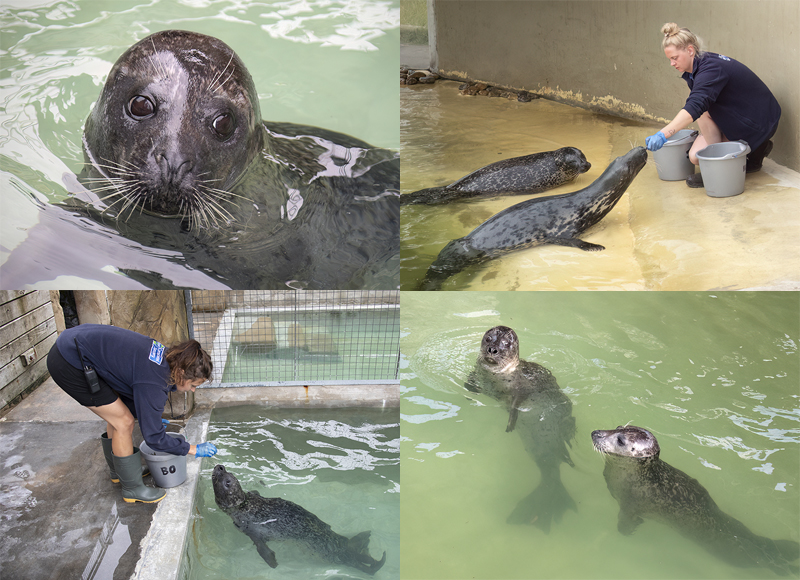
In the wild males Common (Harbour) Seals (Phoca Vitulina) may live up to 20 years old and females to 25 years old. In captivity males and females live slightly longer.
Click here to see a selection of the photos of the Resident Common Seals which were taken in August 2024.
|
Did you know...
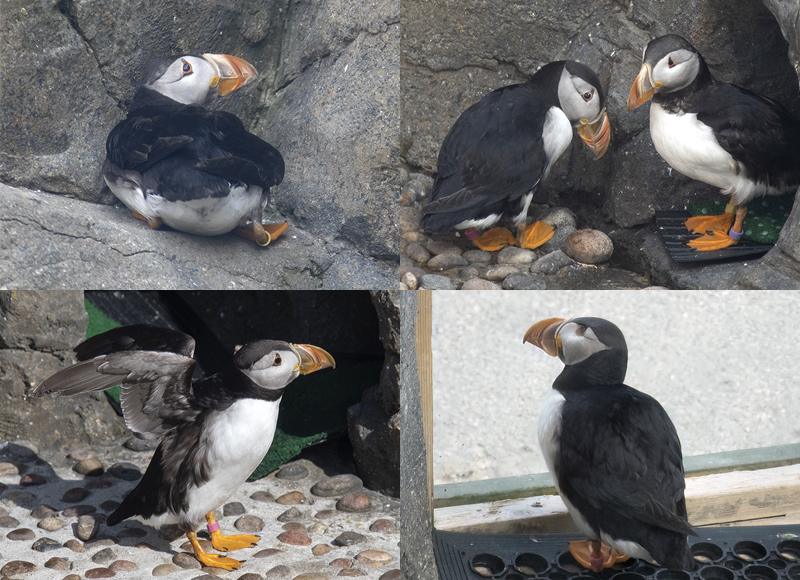
Puffins are adapted to life on and under the water. Puffins can dive to 150 feet (46 metres) and can stay underwater for up to a minute. However, most dives only last 20 to 30 seconds. They have a third eyelid that helps protect the eyes while underwater.
Puffins have a light head in the summer and dark in the winter! They are starting to moult now!
Click here or on the image below to see a selection of photos of the resident Puffins. These photos were taken in August 2024.
|
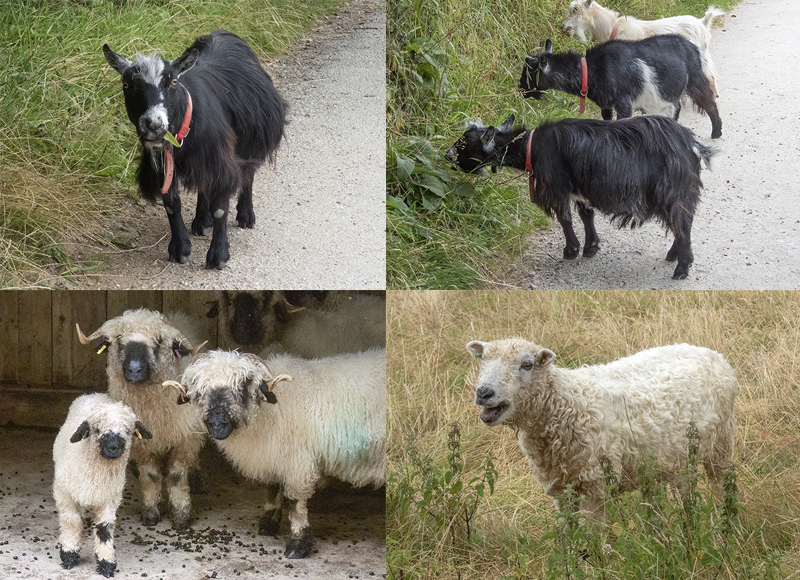
The Goats have escaped or have they! Dennis, Marvin and Bertie, the Pygmy Goats, love to have an early morning wander around the Sanctuary.
Did you know...These goats are mainly black, white, grey and brown in colour. Pygymy Goats are also very smart and curious.
Click here or on the image below to see a selection of photos which were taken in August 2024.
|
Become a Mini "Ocean Explorer" This Summer
Inspiring the next generation of Marine Conservationists with LEGO® fun!
|
As part of their summer activities onsite, The Cornish Seal Sanctuary is excited to announce creative and educational workshops for children, focusing on the importance of marine conservation.
With creative workshops throughout the day, including seal pup rescue demonstrations and informative talks from the charity´s dedicated team, the sanctuary is hoping to inspire the next generation of ocean conservationists.
Alongside these activities, children can participate in The LEGO® Group´s "Build the Change" programme. Children will be able to learn about real life sustainability challenges creating their own ideas to protect Sea Turtles, building with LEGO® bricks.
Children will reflect on ways the changing climate threatens animals like sea turtles, then show their own brilliant ideas for protecting them, all while learning through play.
Started on Thursday 25th July 2024, the event will run for six weeks, providing ample opportunity for families to participate.
Read More.
|
| Click here to find out what to do if you find a Seal Pup or a Seal?
|
Each released seal pup is given a flipper tag with an unique ID number. This helps the Cornish Seal Sanctuary and the Cornwall Seal Group Research Trust (CSGRT) to track and monitor where pups end up and how they are doing once they are back in the wild.
This month the following seals were spotted in the wild by members of the CSGRT from around the coast of Cornwall and the Isles of Scilly:-
|
Orion on 1st, 17th, 19th, 29th and 30th August 2024
Elvis on 1st August 2024
Horseradish on 2nd August 2024
Shuttle and Nudibranch on 3rd August 2024
Mayonnaise on 15th August 2024
Harry on 15th August 2024
Snowdrop on 17th, 19th, 20th and 22nd August 2024
John Henry on 17th August 2024
The Shining on 24th August 2024
Petunia on 31st August 2024
|
The information regarding tagged seals seen in the wild is copyright of the CSGRT.
By monitoring the behaviour of seals after release back into the wild, the Cornish Seal Sanctuary and the CSGRT can use this information to define the best practice standards and policies that they can share with the international rescue community.
Each seal´s fur pattern is unique and enables the CSGRT volunteers track them for life.
Seals face many challenges, yet we all depend on them to balance our marine ecosystem, which is essential to make the oxygen we breathe.
Seals are our globally rare wildlife tourist attraction, helping diversify coastal economic prosperity.
|
| Click here to find out what to do if you find a Seal Pup or a Seal?
|
|
This news update has been put together by volunteers/supporters of the Cornish Seal Sanctuary.
|
|