|
LEWIS was rescued on 1st November 2000
|
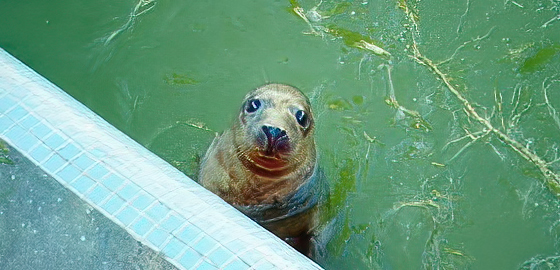
Lewis, a 2 weeks old male grey seal pup, was rescued from St Mary´s in the Isles of Scilly on the 1st of November 2000. A white coat aged under a week, he was rescued due to his position and some unhappy circumstances.
Lewis was found on a roadside just after a blind corner and even though he was repeatedly put back on the beach, he continued to make his way back onto the road.
|
A white pup with its mother had been spotted on the next cove round to Lewis the day before, but the mother had been found dead that morning. Lewis was flown to Penzance by helicopter. The pup soon settled in the hospital. Weaned from milk onto fish he soon started to feed himself. With some TLC and a worming treatment, Lewis was moved outside to the nursery pools for his rehabilitation.
His flipper tag ID number is 47.
He was released back into the wild on the 14th of February 2001 on the Isles of Scilly.
|
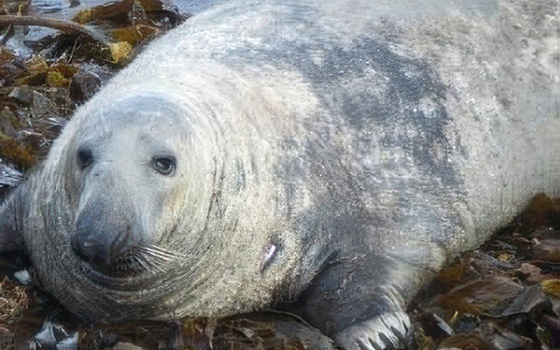
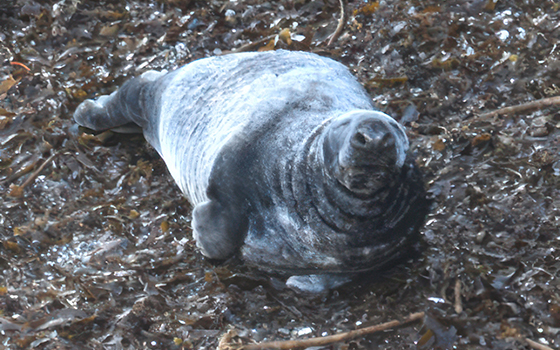
Update - 31st January 2026 : Lewis has been seen in the wild many times over the years around Cornwall and Devon coasts.
© Photo Credit and information - Seal Research Trust
|
| Also seen on 3rd & 14th November 2021, 26th January 2022, 9th July 2022, 11th October 2022,
12th, 18th and 20th November 2022, 19th & 20th December 2022, 6th, 16th & 20th January 2023, 25th September 2023, 29th January 2024, 9th February 2024 and 31st January 2026.
|
By monitoring the behaviour of seals after being released back into the wild, the Cornish Seal Sanctuary, Seal Research Trust and other organisations can use this information to define the best practice standards and policies that they can share with the international rescue community.
Each seal´s fur pattern is unique and enables the organisations to track them for life.
Seals face many challenges, yet we all depend on them to balance our marine ecosystem, which is essential to make the oxygen we breathe.
Seals are our globally rare wildlife tourist attraction, helping diversify coastal economic prosperity.
|
|