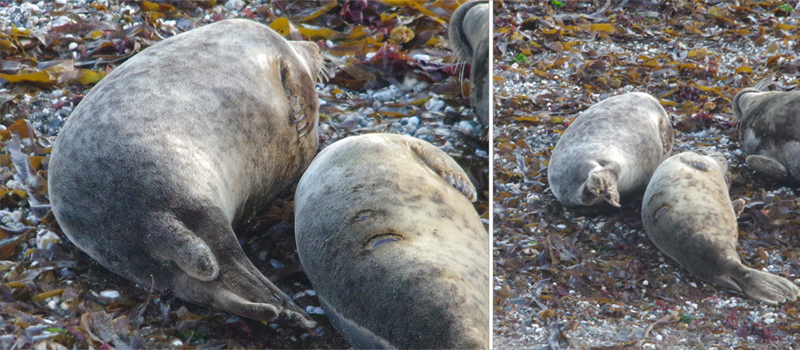
Arnold Schwarzenegger was rescued on 12th March 2024
|
Arnold Schwarzenegger, a 4-6 months old male grey seal pup, was rescued from Constantine Bay on the 12th of March 2024 by the British Divers Marine Life Rescue (BDMLR) volunteer marine mammals medics. The pup was found with malnourished and underweight for his age with respiratory issues.
This pup was transferred to the Sanctuary for care and rehabilitation by the Animal Care Specialists team.
© Photo Credit : Lizzi Larbalestier - BDMLR
|
|
Update - 19th March 2024 : It will not be too long before Arnold will be moved down to the outside nursery pools for his final stage of rehabilitation and to learn how to compete for fish during feeding time. These photos of Arnold were taken on the 19th of March 2024 in the hospital pen.
|
Update - 25th March 2024 : Arnold is now in the outside rehabilitation pool with other rescued seal pups. It will not be too long before he is released back into the wild in the next few weeks.
His flipper ID tag number is SL297 (yellow).
|
Update - 21st April 2024 : The weather conditions in Cornwall were perfect to release some of the seal pups who had been staying at the Sanctuary for the past few months were released back into the wild on the 17th of April 2024.
Arnold along with John Henry and Lough Rea, were all at a good weight and fully recovered thanks to the care and expertise of the brilliant Animal Care Team. It is such an amazing feeling for the team to see them happily "galumphing" back home. Good luck little ones.
|
By monitoring the behaviour of seals after being released back into the wild, the Cornish Seal Sanctuary, Seal Research Trust and other organisations can use this information to define the best practice standards and policies that they can share with the international rescue community.
Each seal´s fur pattern is unique and enables the organisations to track them for life.
Seals face many challenges, yet we all depend on them to balance our marine ecosystem, which is essential to make the oxygen we breathe.
Seals are our globally rare wildlife tourist attraction, helping diversify coastal economic prosperity.
|
|